

Lokyata, New Delhi
Ray Meeker
Kurukshetra Ray Meeker
Peter Nagy and Nature Morte have been having a particularly engaged season at New Delhi's Lokayata Dome. The penultimate show of the season is Kurukshetra, Ray Meeker's indictment of man's relentless reprisal of the powers of nature. "Is this mass suicide?" he questions. "Never have we had so much opportunity to raise the quality of life for all, or equally, to wreck havoc on life itself."
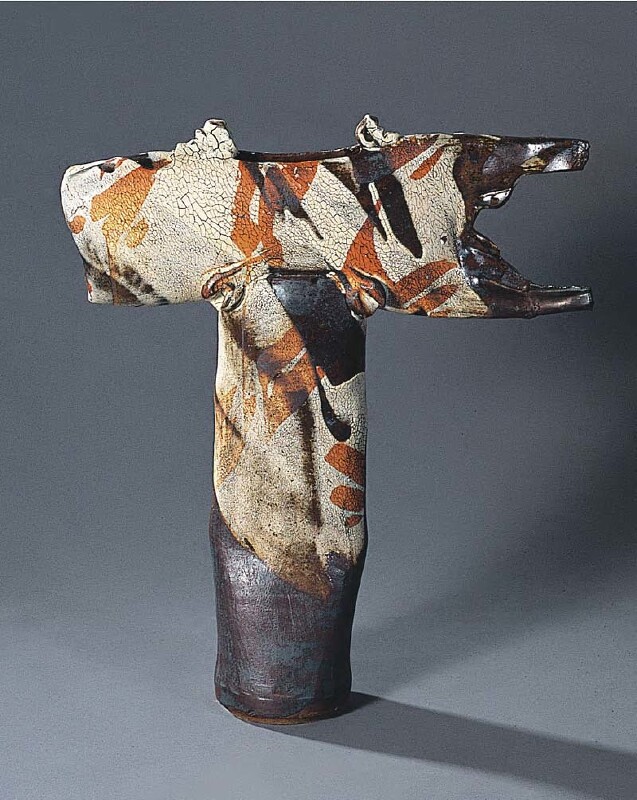
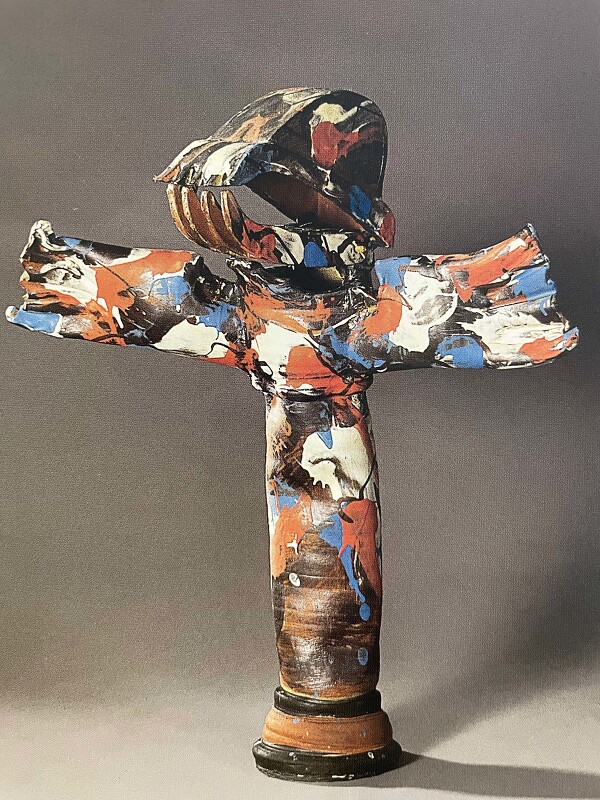
Ray Meeker, who since 1971 has lived in Pondicherry and run the Golden Bridge Pottery with Deborah Smith, is well known for his fired houses, as much as for his string of talented students. In only his third show in 15 years, Meeker returns to the primeval form of the totem to create the sense of battle formations and overt aggression.
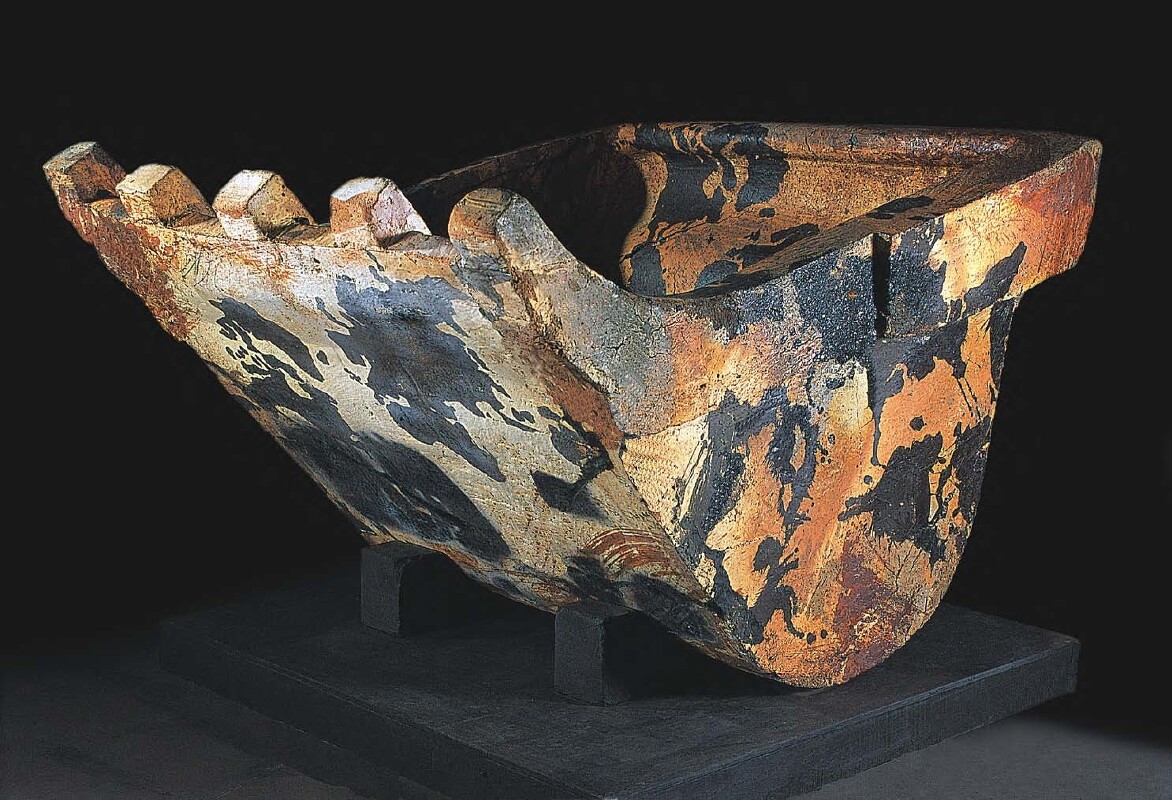
His interpretation of Kurukshetra, however, is highly personalised. At the centre of the idea of aggression are three large earth movers or excavators, inscribed with poetry on the violation of nature.
Meeker's position is clearly in favour of a return to an innocent communion with nature in which the terrifying march of 'progress' is checked by a sensitive discerning view of the environment.
The entire sculptural installation comprises totemic forms on the wall, three large excavators in the centre, and stellae, which essentially repeat the excavator image.
Meeker raises a pertinent moral issue, and in using the totemic form integrates ideas of lost cultures like the Native American Indian, which have been decimated in an earlier time in the name of progress, but which serve a warning for the cultures of the developing world.
Meeker's intention in this exhibition is fairly straight forward, but the title Kurukshetra is a loaded one. In its narrativist sense, Kurukshetra is also restorative; the 18-day battle restores order and righteousness, and in this sense is not an act of aggression against nature but arguably a necessary engagement.
Gayatri Sinha, 'Kurukshetra' again
The Hindu, March 2001