The Dhan Mill
Exposed Spine
Nature Morte in collaboration with Jaipur Rugs is proud to present Exposed Spine, a solo exhibition of new work by Neeraj Patel, opening on July 3, 2026 in what is Nature Morte’s final exhibition at its Dhan Mill space. Marking the artist’s third solo exhibition with the gallery, multidisciplinary artist Neeraj Patel presents a body of monumental textile works that translates his ongoing engagement with artisan communities, industrial landscapes and fragmented environments into woven, sculptural form.
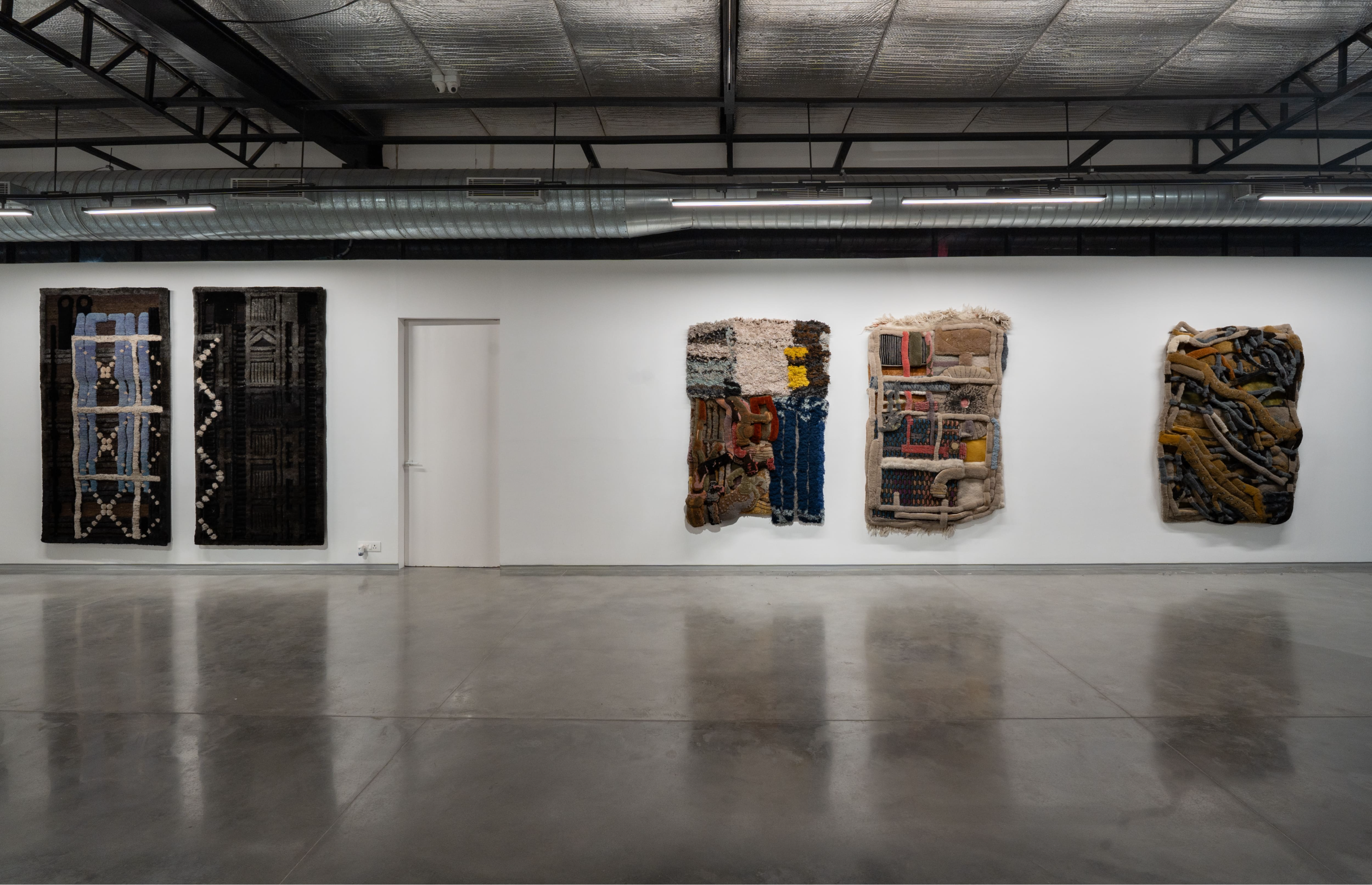
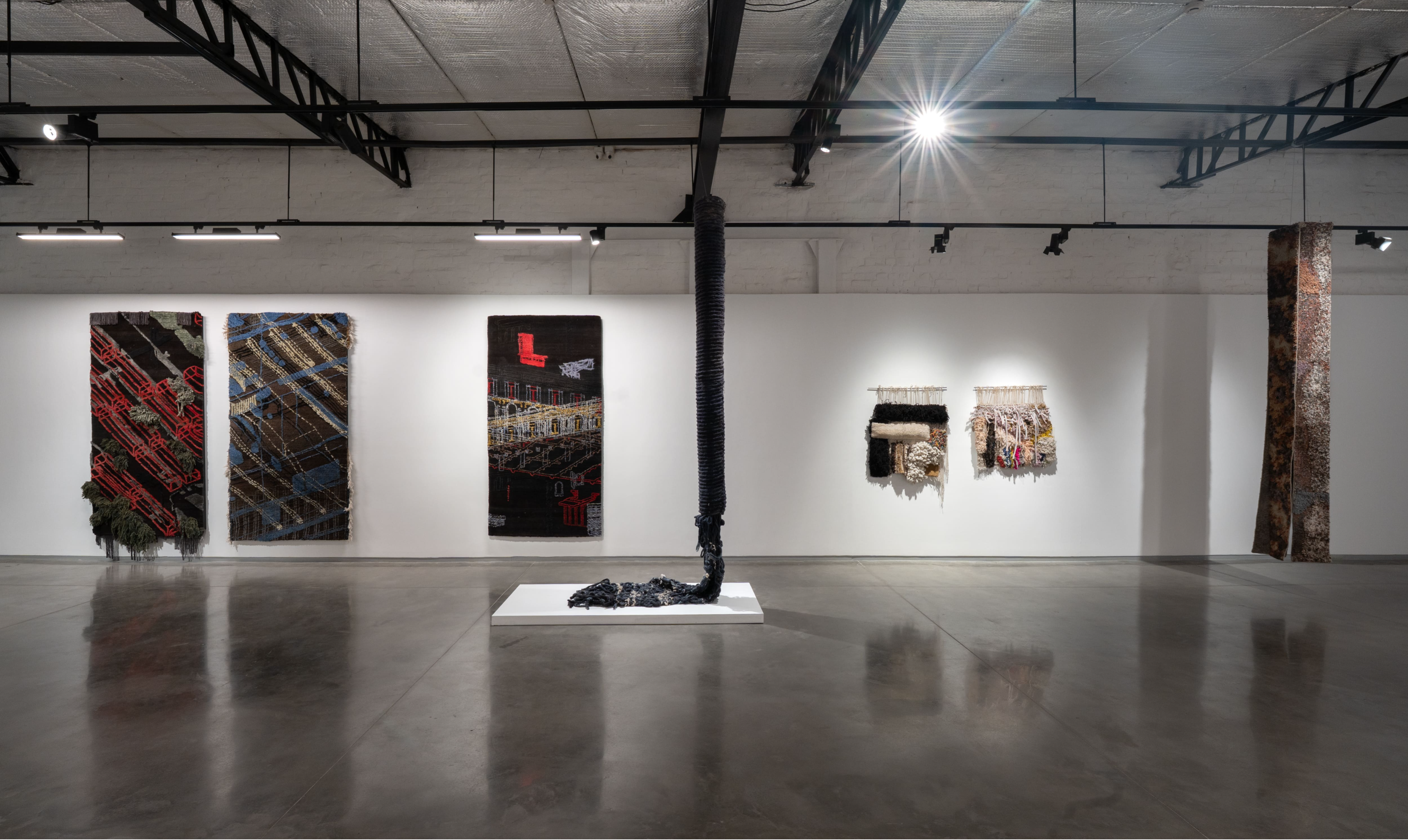
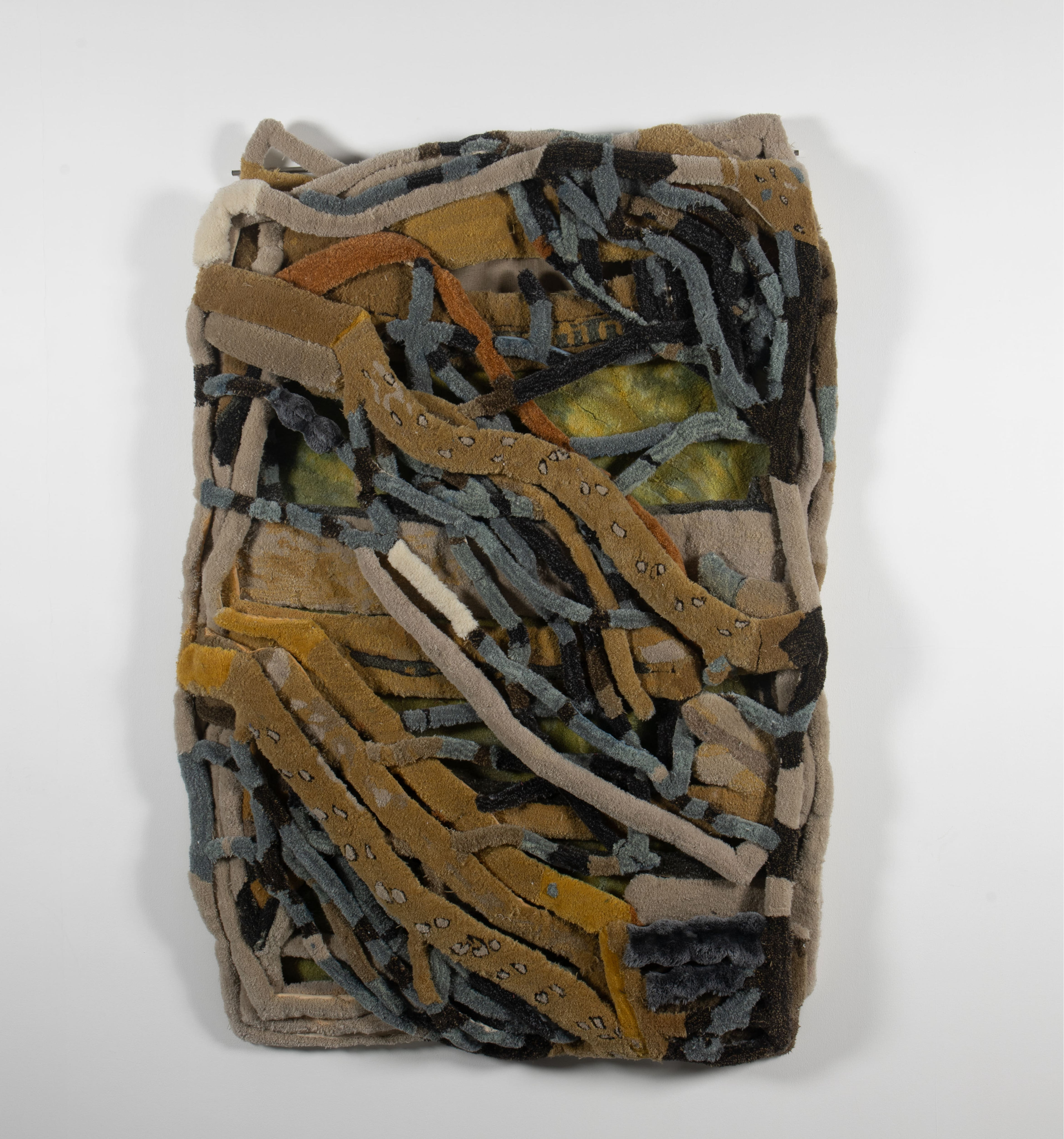
Conceived during JR Residency by Jaipur Rugs, the artworks were created as an extension of Residency through a unique collaboration between Neeraj Patel and Jaipur Rugs. Handmade using wool, bamboo silk, jute, cotton, industrial ropes and threads, the works emerged through material experimentation and sustained engagement with industrial, the exhibition presents a body of work created in dialogue with the artisan communities of Jaipur Rugs. Patel approaches the rug not simply as a functional or decorative object, but as a site of image-making, interpretation and collective labour. Rooted in his observation of built environments, their surfaces, thresholds, fragments and accumulated histories his practice translates architectural forms into fibre, texture and knot through processes of layering, repetition and spatial reconstruction.
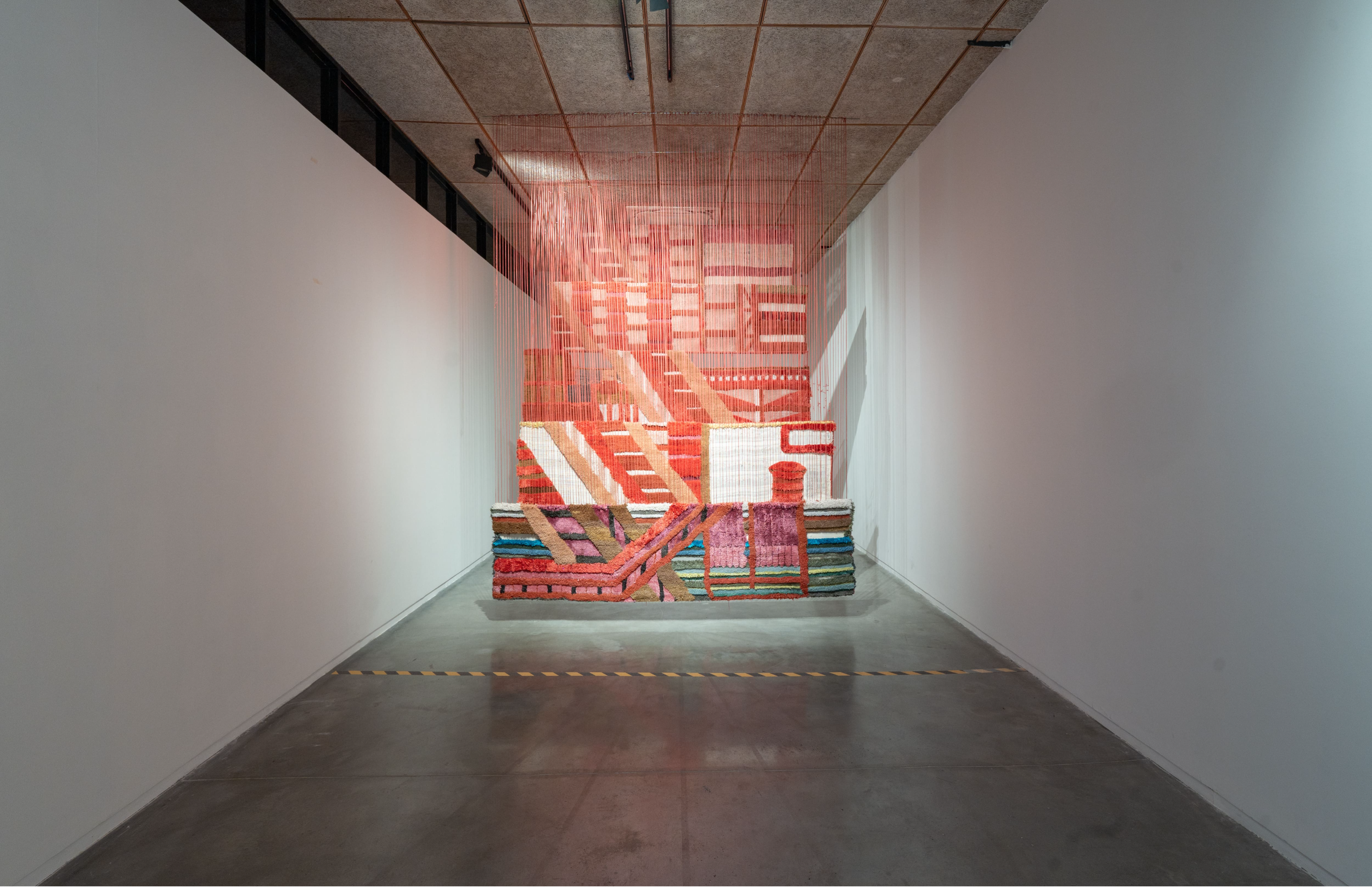
The exhibition foregrounds a group of monumental textile sculptures that transform Patel’s drawings into spatial, woven forms. Rising to nearly ten feet, works such as Bursting Pillar, Augmented Monolith, Endless Entanglement and Open Web combine hand-knotting, hand-tufting, embroidery, wool, industrial ropes, brass and beads to reimagine obsolete structures as fragile monuments to labour, erosion and disappearance. A second body of work including Stratified Ruins, Tufted Grid, Continuous Horizons, Material Scribbles and Time in the Leftover Presence II extends his paper reliefs and architectural studies into layered textile interventions, in which industrial landscapes and machines are softened, fragmented and reconstructed through fibre and thread.
Patel’s engagement with material and spatial transformation has developed through a sustained practice across drawing, sculpture and textiles. He has presented multiple exhibitions with Nature Morte, continuing a dialogue around the relationship between image, material and form. His first collaboration with Jaipur Rugs resulted in Shift Remains, a monumental textile installation created for the sixth edition of The Sculpture Park at Jaigarh Fort, where it remains on view until the end of 2026. Handwoven in vibrant red bamboo silk, the work extends Patel’s exploration of structure and presence through exposed surfaces, openings and the tension between density and fragility. The exhibition also includes Time in the Leftover Presence II, previously presented as part of a collaboration between the Italian Embassy Cultural Centre, Aga Khan Trust for Culture, Archaeological Survey of India and Museo delle Civiltà, Rome. Depicting an obsolete industrial machine through hand-knotted wool and thread, the work continues Patel’s transformation of built environments into layered material landscapes.
The movement from drawing to weaving introduces a different relationship with time and authorship. A line made in an instant on paper must be constructed slowly on the loom, knot by knot, passing through the gestures, decisions and technical knowledge of the weavers. Rather than reproducing Patel’s drawings exactly, the woven works allow for variation, interruption and material transformation: colour behaves differently in wool, edges soften, lines acquire weight and forms become tactile. Together, the works dissolve the boundaries between drawing, sculpture and textile, emerging as spatial and material archives in which memory, labour, architecture and contemporary craft continually reshape one another.
“Working with the loom changed my understanding of the line. A drawn mark can be immediate, but a woven line contains duration. It records time, repetition and the presence of the person making it,” says Neeraj Patel.
JR Residency provides the framework for this encounter, bringing contemporary artists and designers into direct engagement with weaving communities, traditional techniques and material practices. The programme offers a space in which craft is not treated as a fixed inheritance, but as a living and evolving form of knowledge.
Exposed Spine raises broader questions around authorship and collaboration within contemporary craft and art. Who produces the image? Where does the artist’s gesture end and the artisan’s interpretation begin? Through this exchange, the works resist singular authorship and instead emerge from a layered process of conversation, negotiation and making.
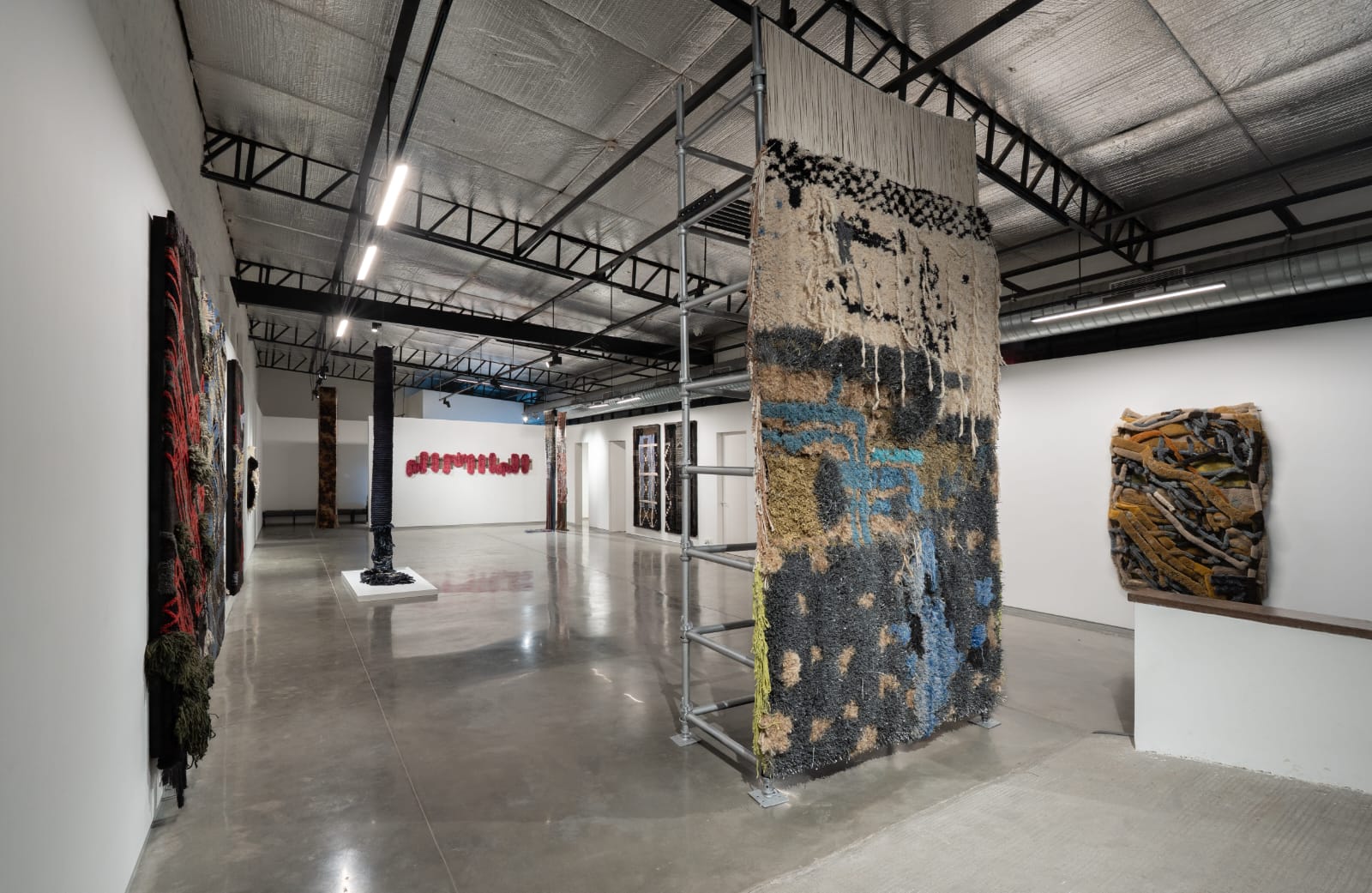
Installation Views