

New Delhi
Sharmistha Ray
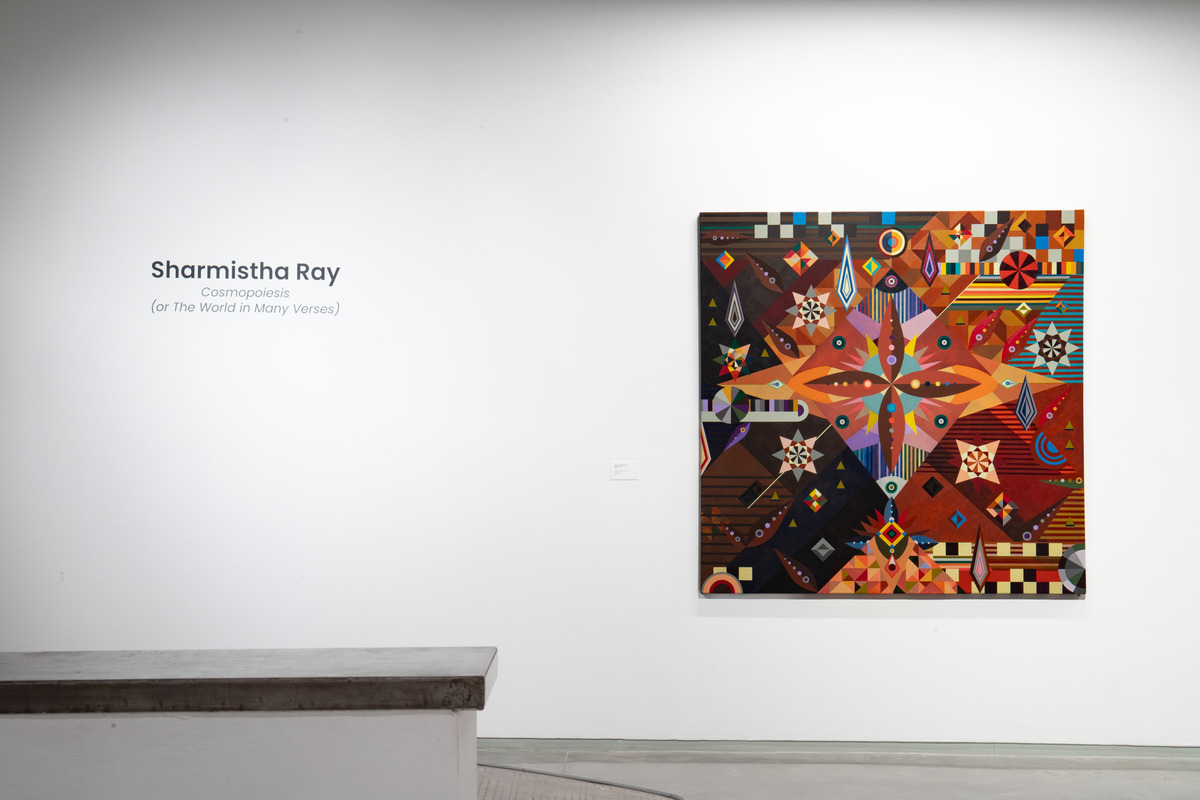
Cosmopoiesis (or The World in Many Verses) Sharmistha Ray
Nature Morte is pleased to present Sharmistha Ray’s first exhibition with the gallery.
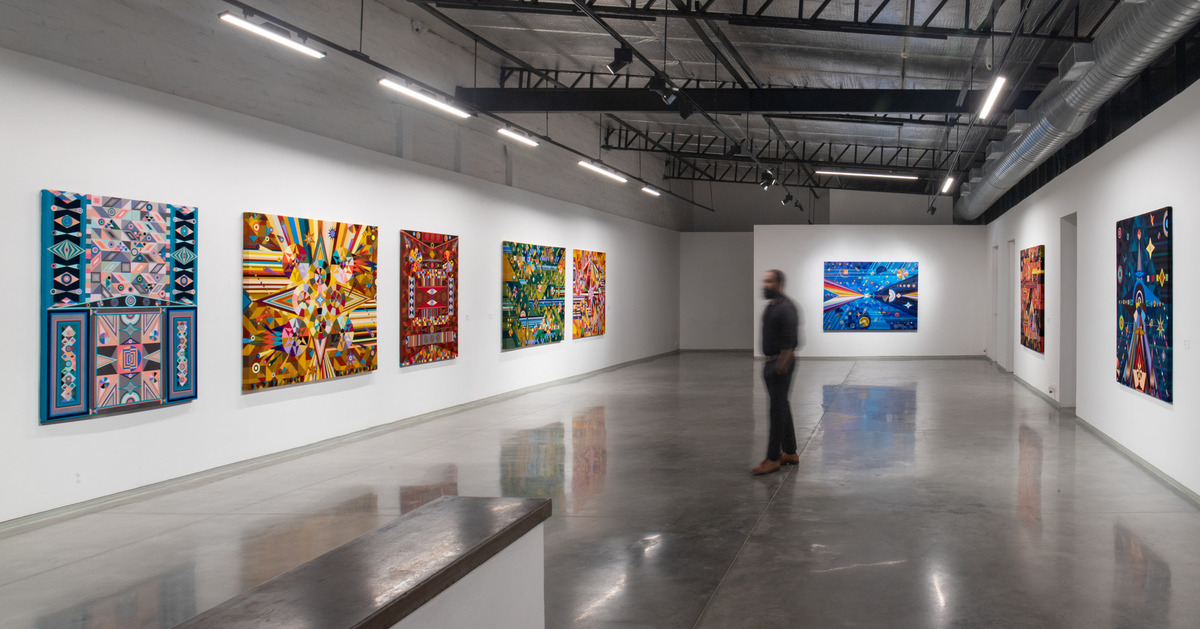
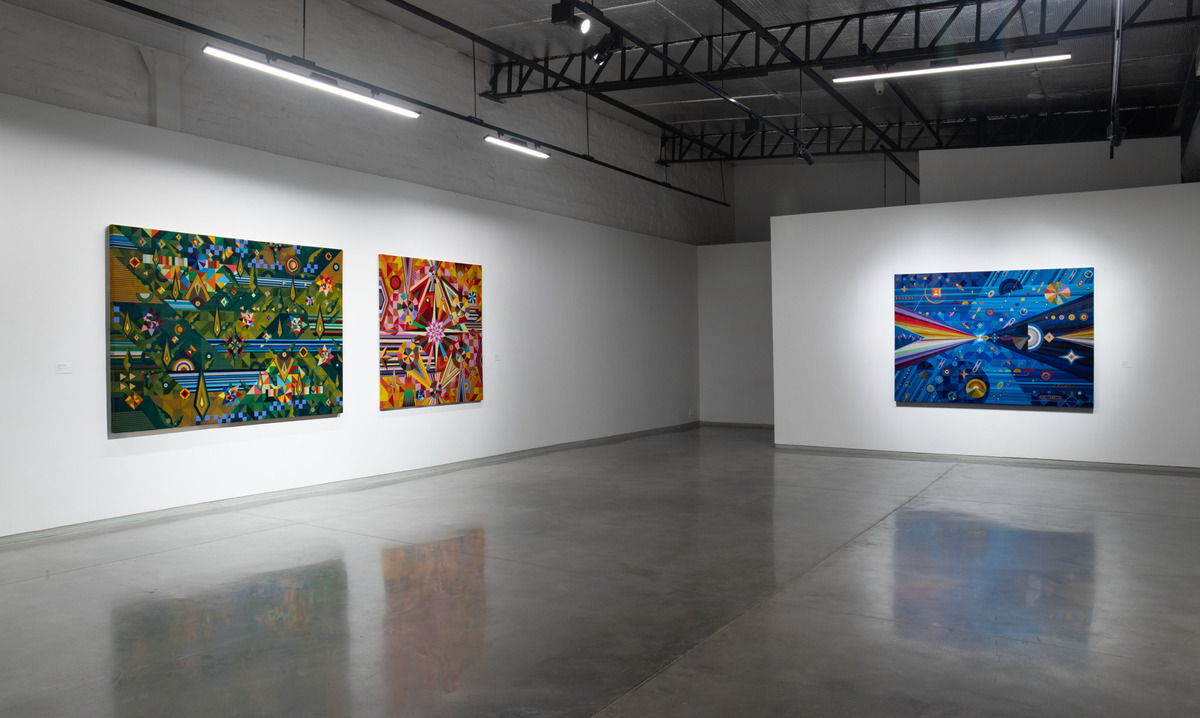
Cosmopoiesis (or The World in Many Verses) proposes the cosmos not as a distant abstraction, but as an intimate, living grammar through which bodies, desires, politics, and matter continuously inform one another. Across painting and animation, Sharmistha Ray’s solo exhibition advances a vision of world-making as a plural, ongoing act—one that resists singular truths, linear time, and fixed identities in favor of relation, multiplicity, and becoming. Rooted in feminist, queer, and speculative cosmologies, the exhibition imagines the universe as a field of entanglements where perception and possibility are inseparable.
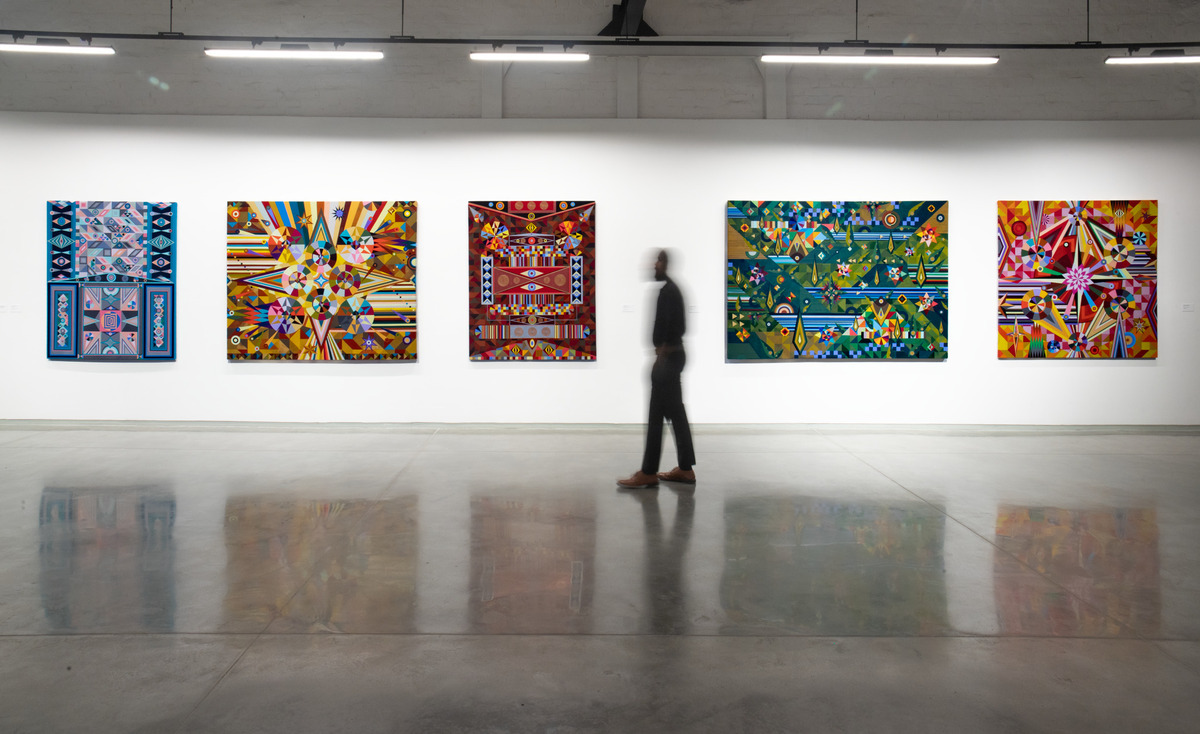
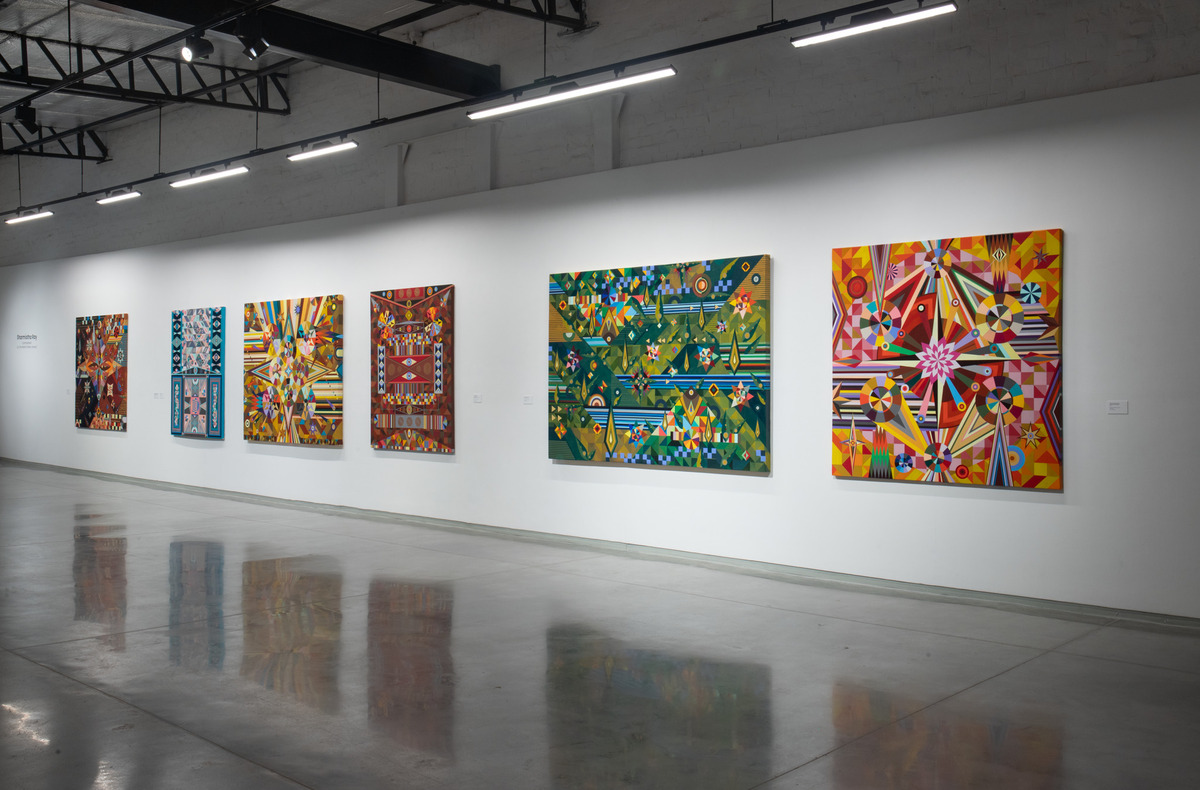
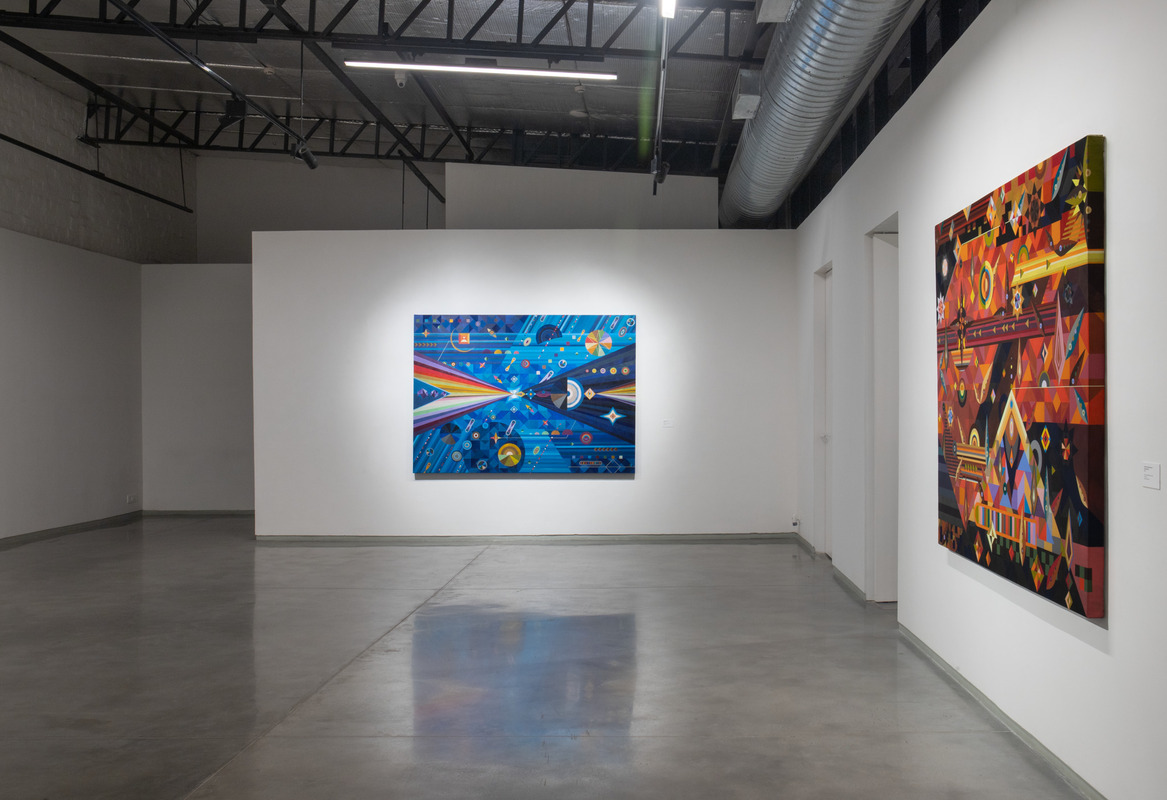
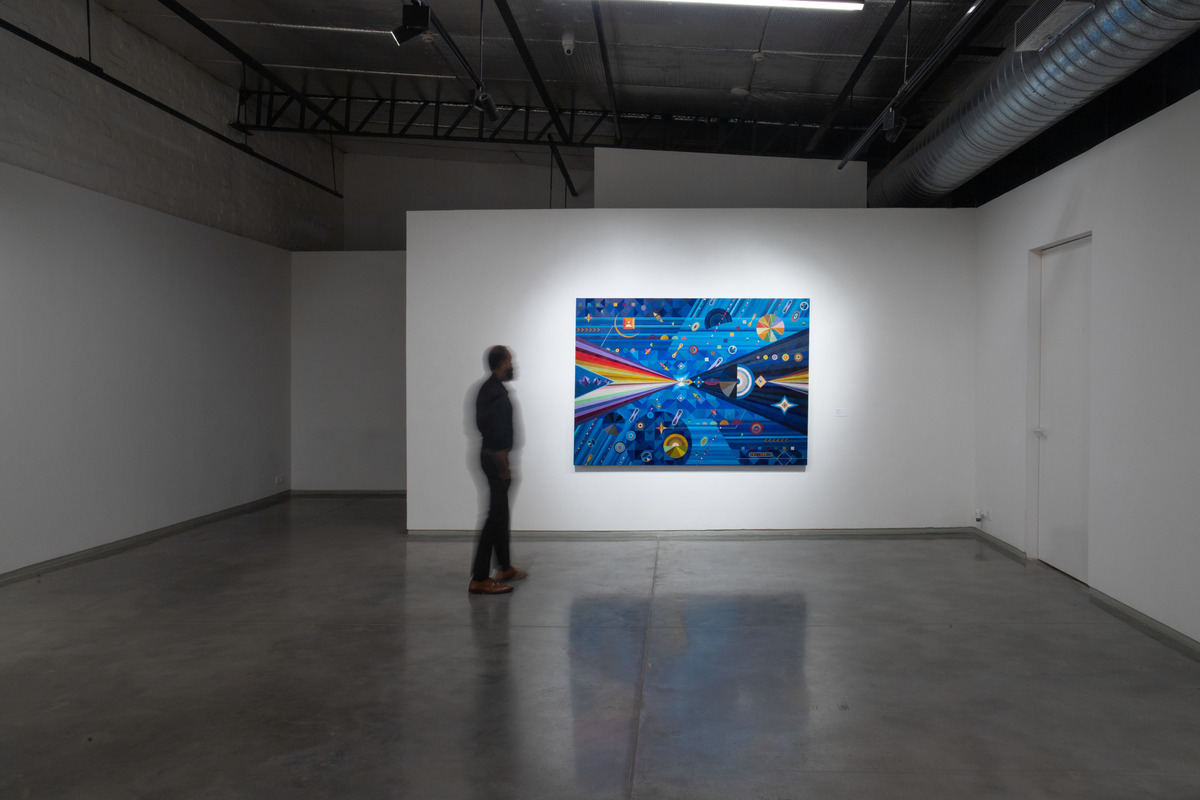
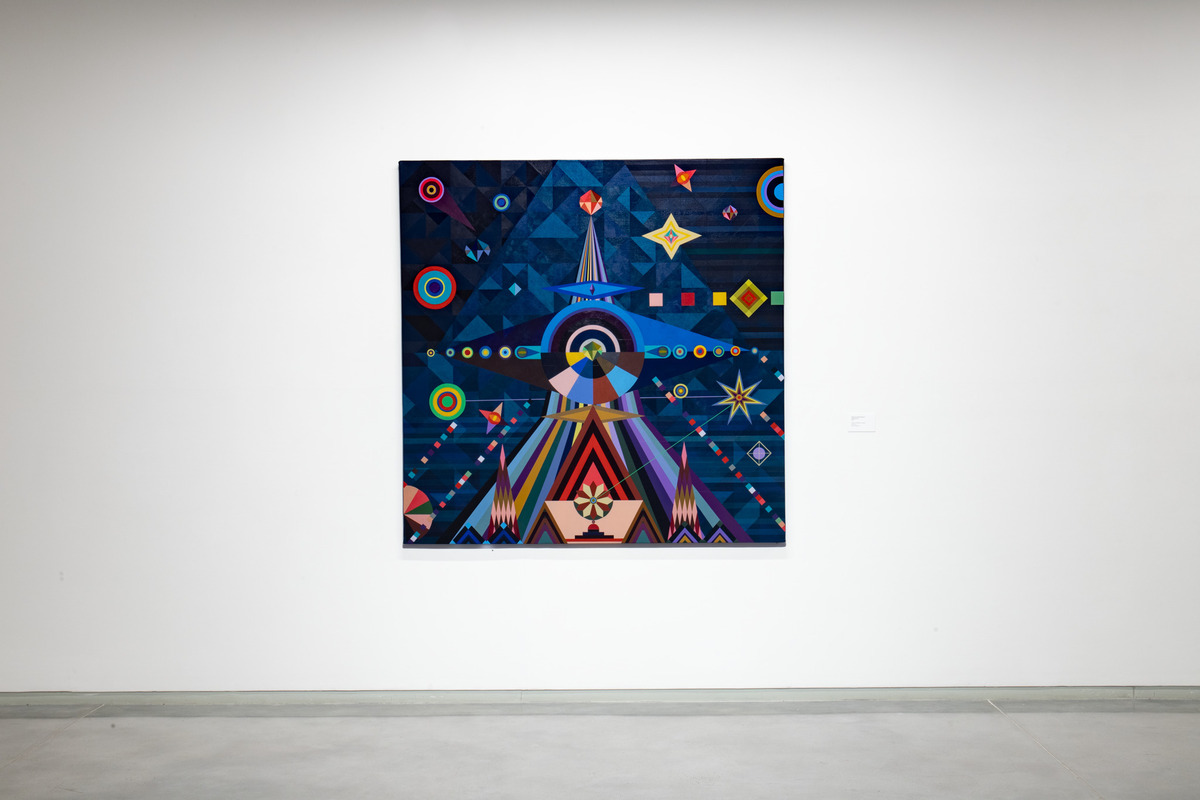
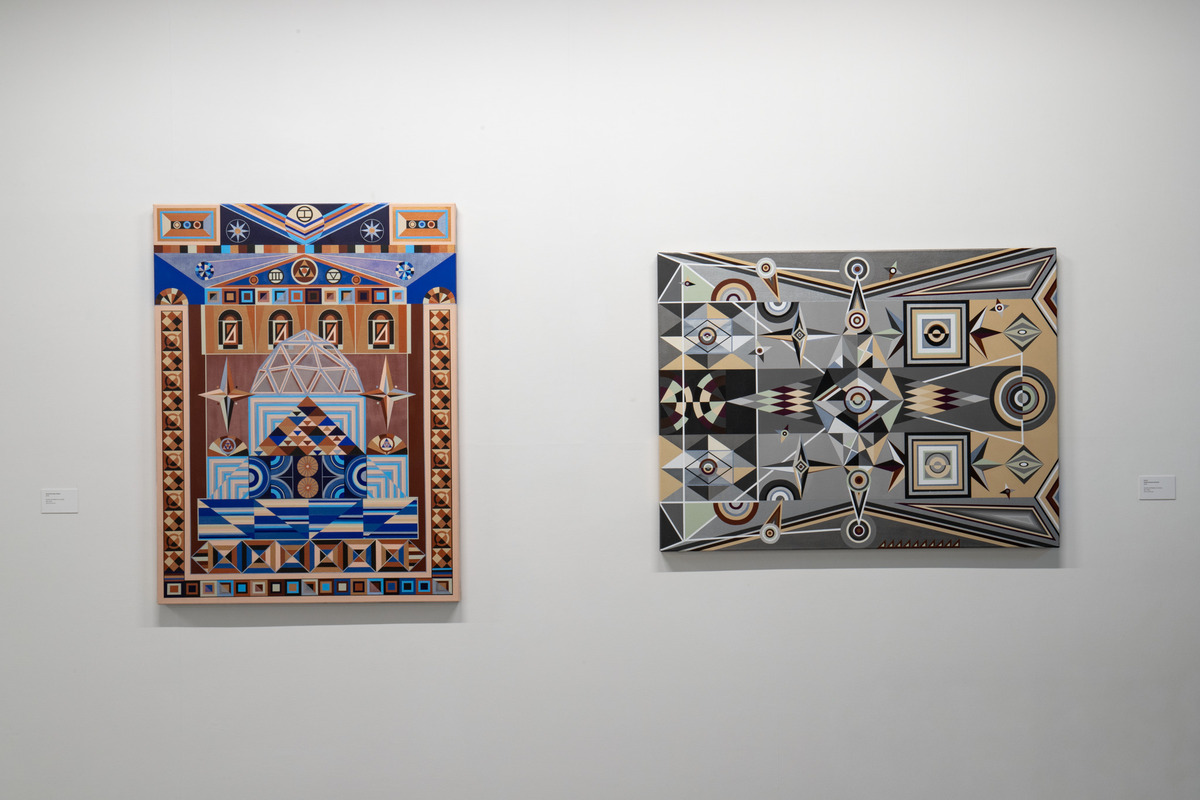
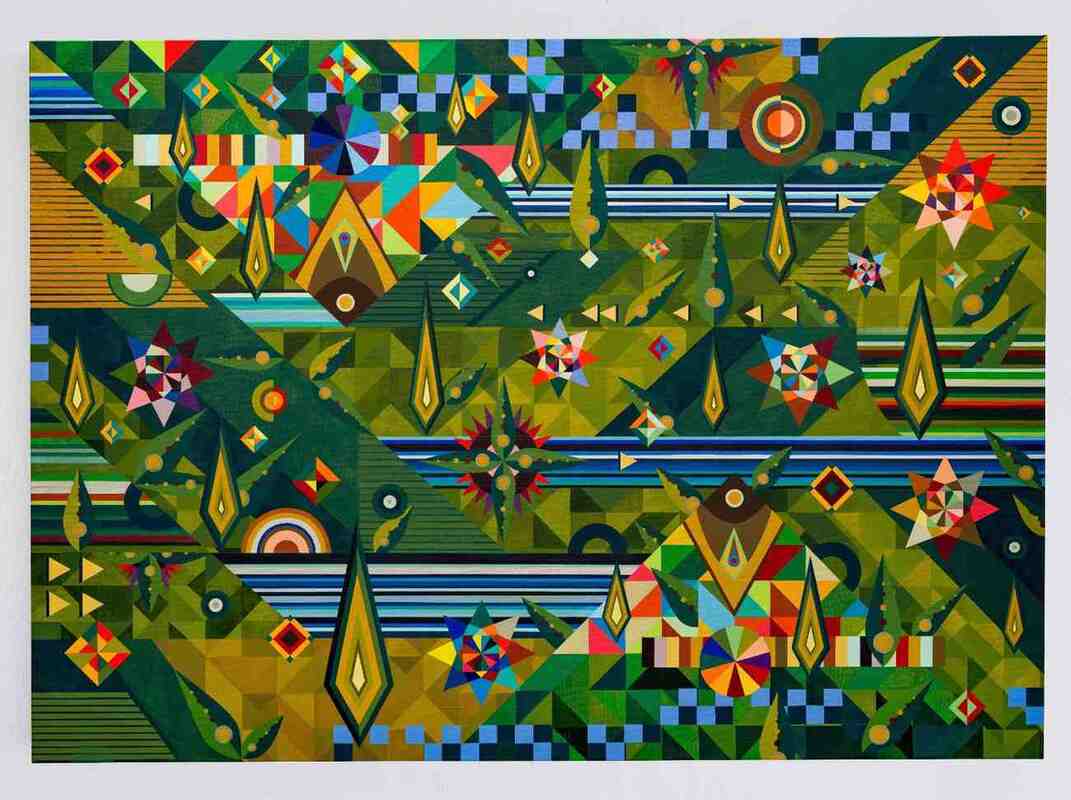
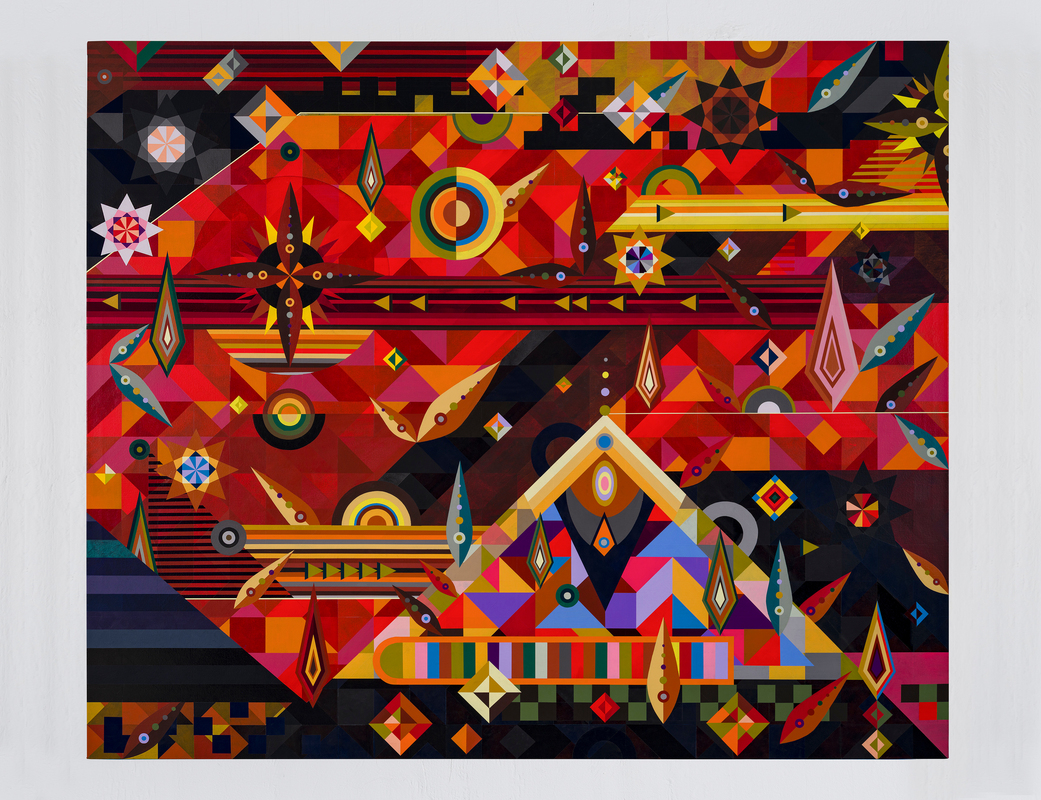
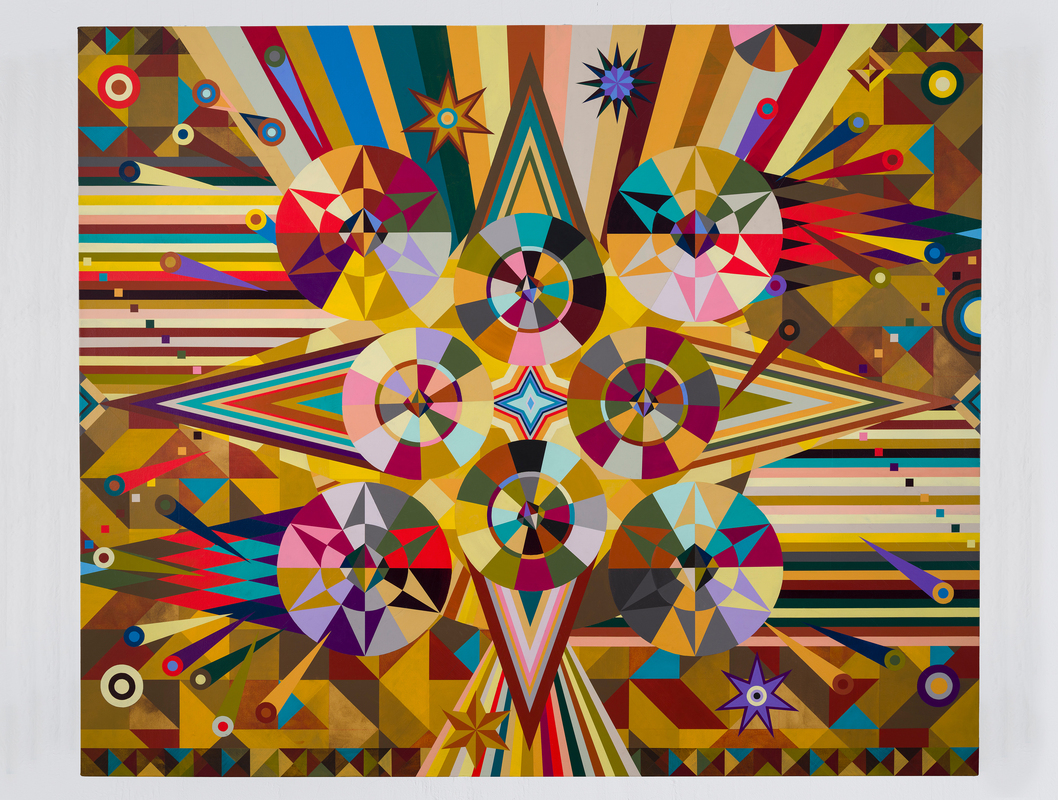
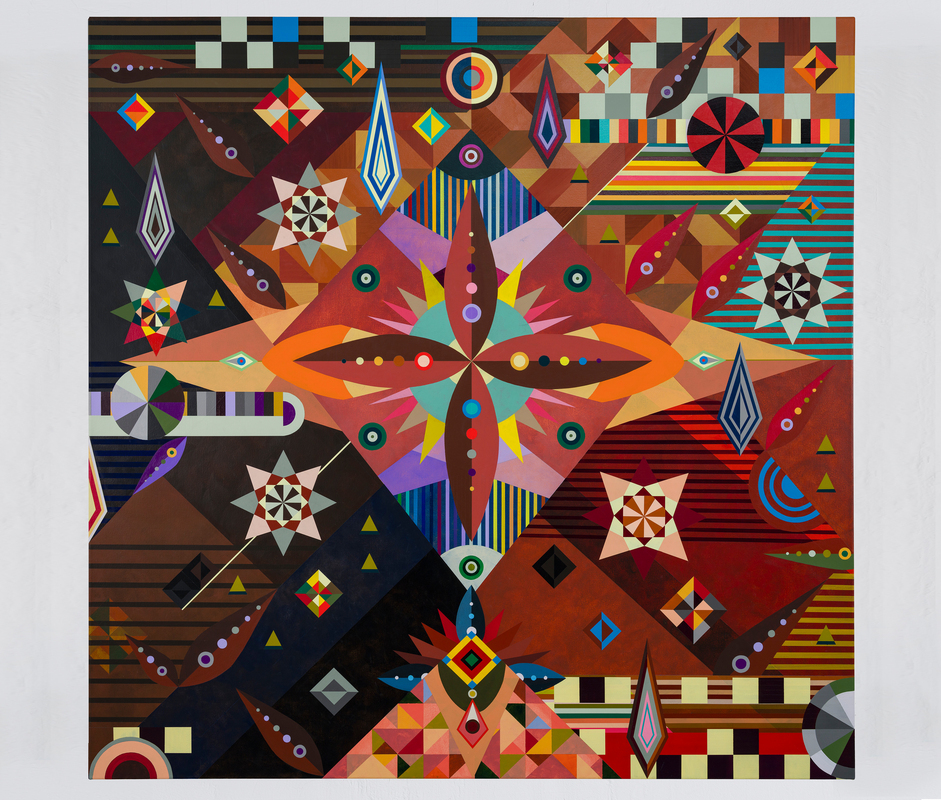
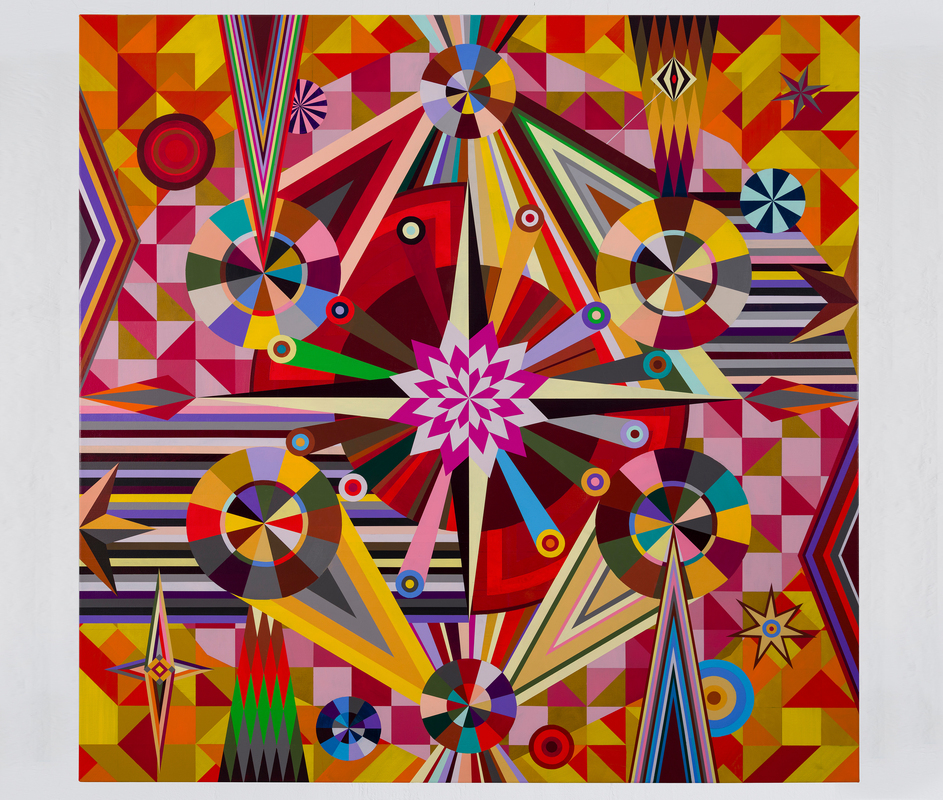
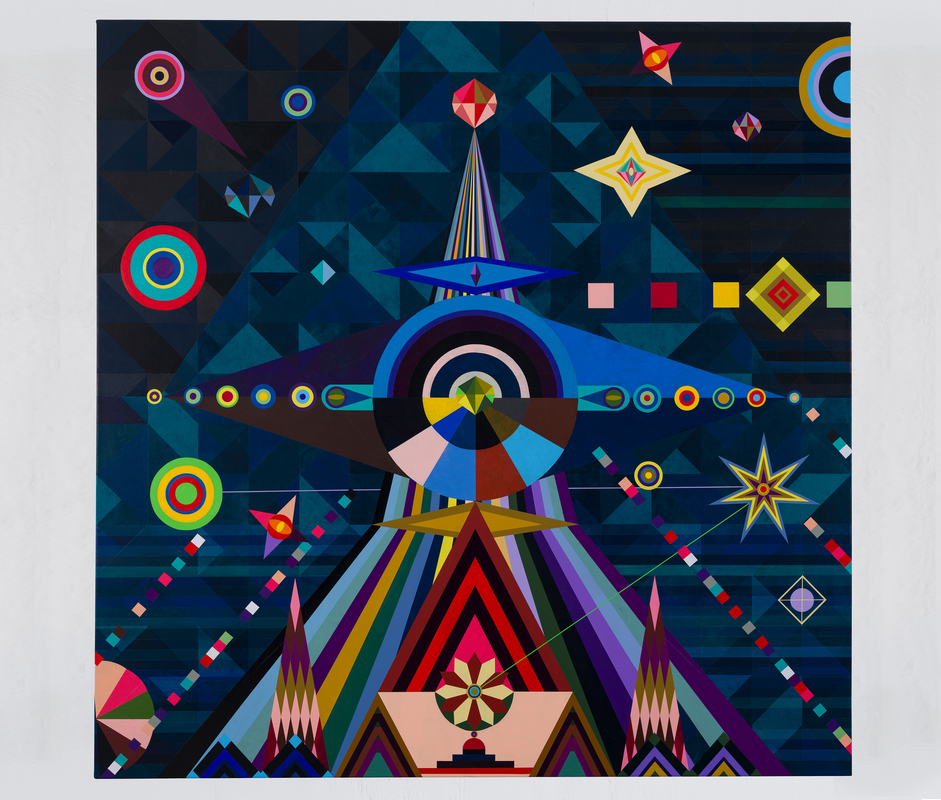
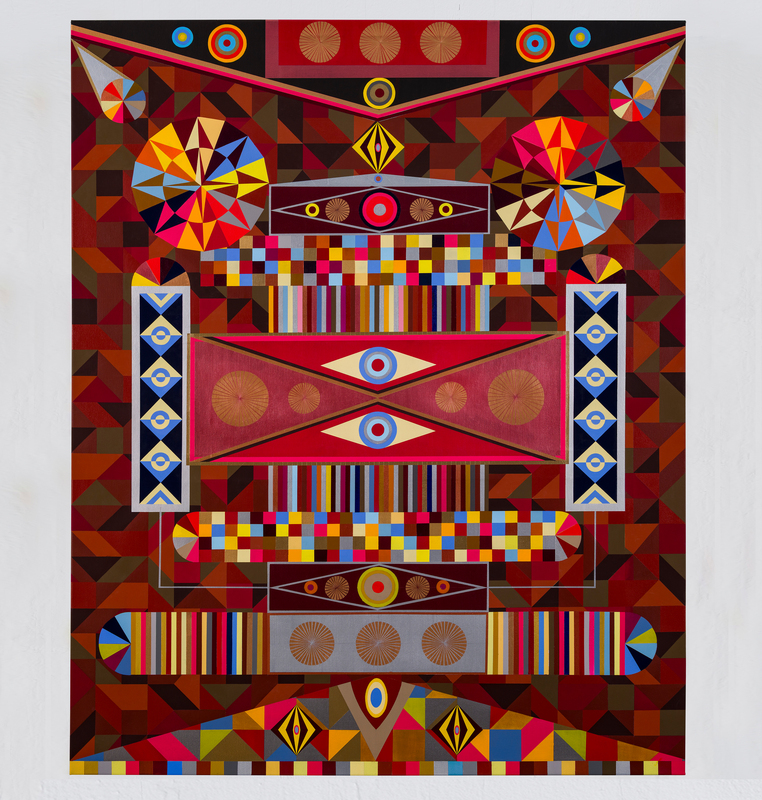
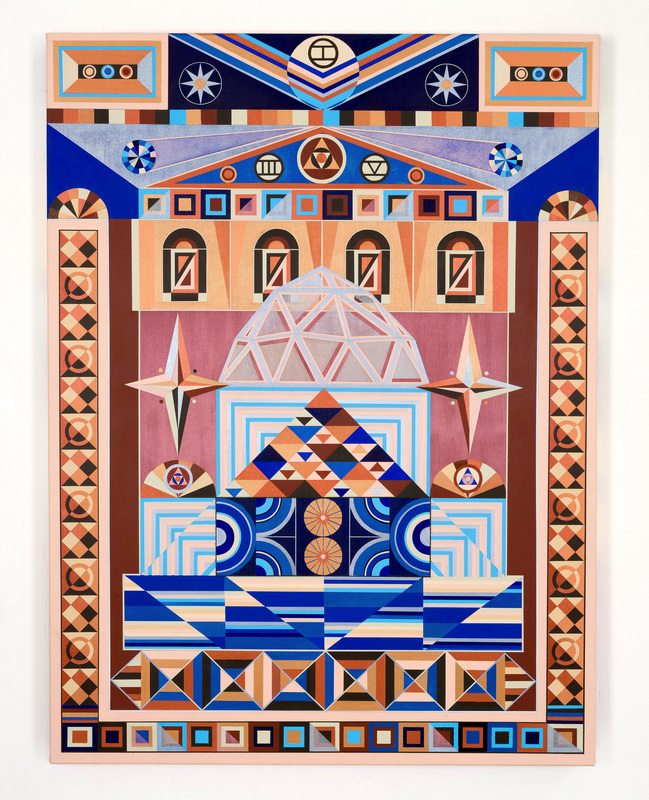
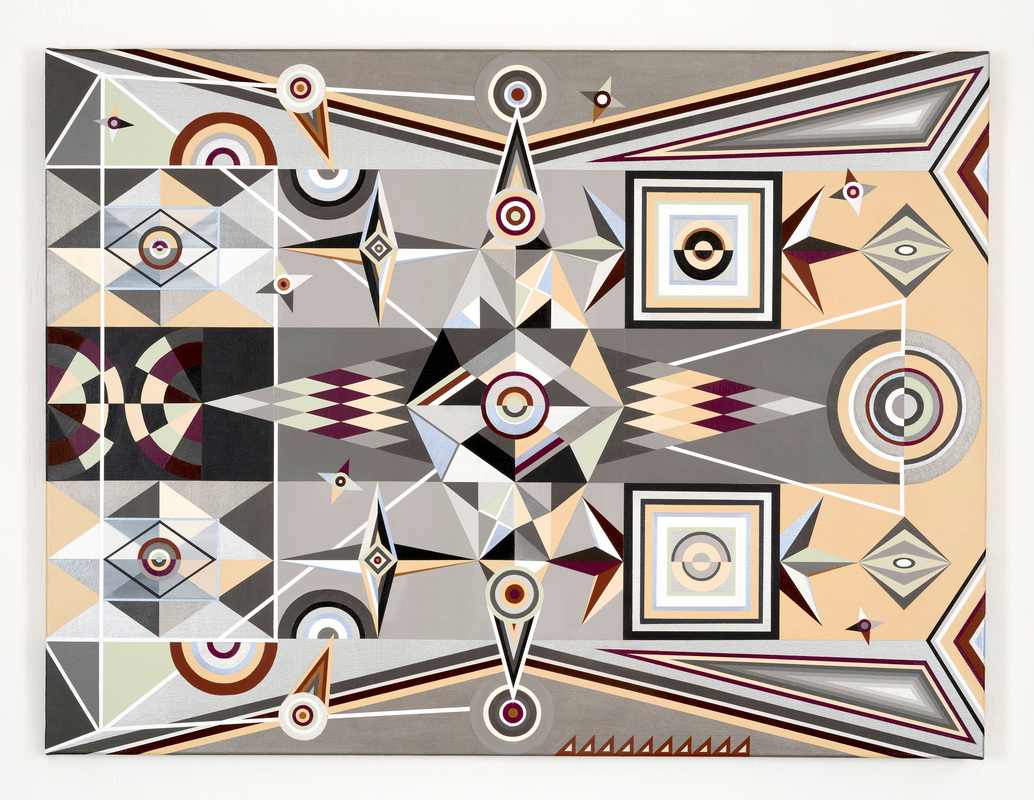
The paintings from the series Interplanetary Futures and Patterns of Becoming extend Ray’s sustained engagement with cosmology and consciousness. Fusing modernist abstraction with ancient visual languages developed to render the sacred, these works treat abstraction as a tool for sensing what exceeds ordinary perception. Celestial forms—revolving planets, digital pixels, chakra-like wheels, comets, gemstones, and navigational devices—circulate through luminous color fields, suggesting the body as porous and expansive, composed of the same atomic matter as the cosmos itself. Patterns emerge, proliferate, rupture, and transform, echoing biological growth, social movements, and psychic shifts. The compositions resist linear progression, favoring cyclical, branching, and overlapping structures that reflect non-normative experiences of time and embodiment. Here, becoming is not a destination but a continual negotiation—an unfolding that honors uncertainty, multiplicity, and relationality.
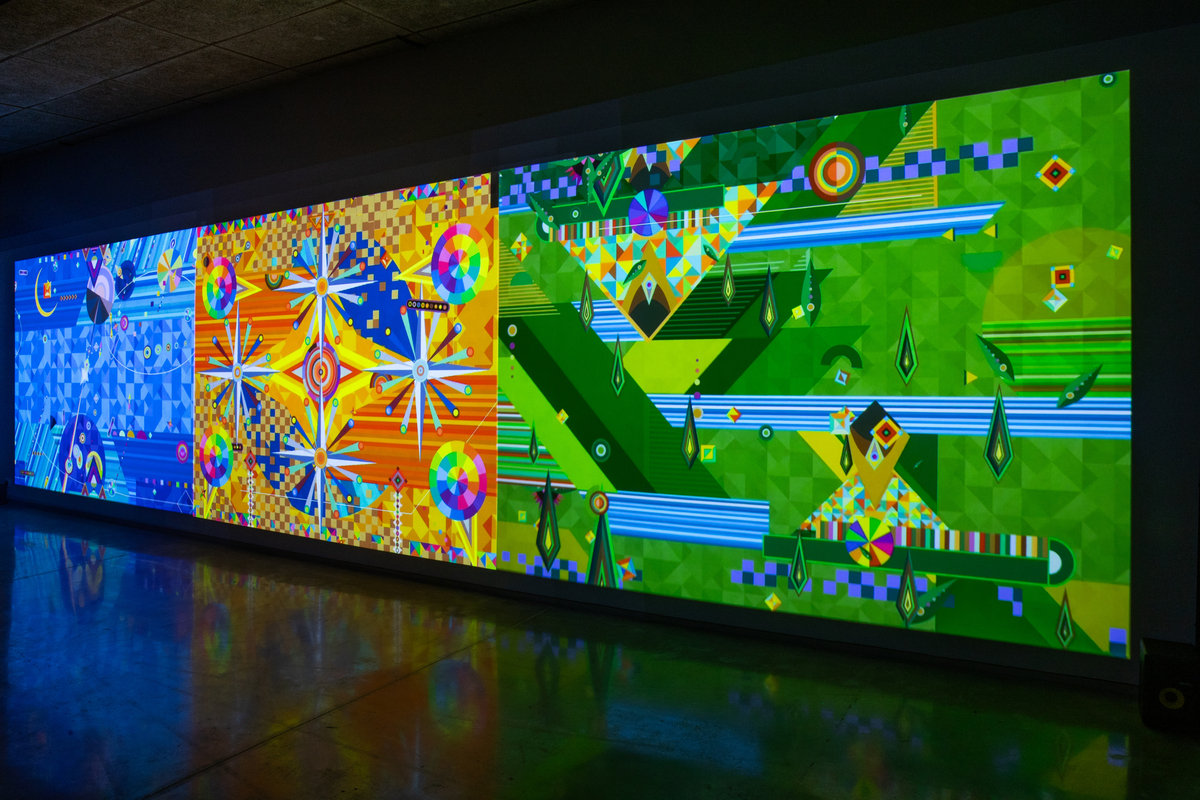
The exhibition culminates in Emergent Realities, a three-channel animation that collapses ecological, cosmic, and psychological scales into an immersive, simultaneous experience. Collaging painted abstractions, original and found footage, and astronomical imagery, the work dissolves linear time into a coexistent field where past, present, and future permeate one another. Each channel operates independently yet in dialogue, drawing the viewer into a perceptual vortex of drifting satellites, arcing comets, dissolving matter, blurry images, and pulsing light. Accompanied by a newly composed musical score by Arooj Aftab, the animation becomes a sensorial meditation on cause and effect as resonance rather than sequence—where memory, ecological precarity, and planetary motion echo across space-time.
Together, the paintings and animation in Cosmopoiesis envision a world perpetually in the making. Ray’s practice resists closure and singular meaning, instead foregrounding relational ways of seeing that situate the personal within the cosmic and the cosmic within the political. Through a shared materiality that binds bodies to stars, the work imagines the self as porous and in flux—unmoored from fixed identities, borders, and hierarchies. In this expanded field of relation, permeability becomes both a condition of survival and a gesture toward solidarity, inviting viewers to consider how recognizing our entanglement across space-time might open new frameworks for collective liberation and justice.
About the Artist
Sharmistha Ray (they/them) is a visual artist and Estella Loomis McCandless Assistant Professor of Art at Carnegie Mellon University. Their artistic practice delves into the complex inheritance of multiple cultures through their queer identity and modes of historical and contemporary abstraction. Working primarily in painting and drawing, they have also made work in animation and sculpture, curated projects, and written prolifically for significant publications and journals on critical and theoretical frameworks in contemporary art practice. In addition to their solo work, they co-founded the spiritualist feminist art collective Hilma’s Ghost which acts as a collaborative model for research, artistic production, pedagogy, and community.
Artworks
Installation Views